Comix as a Tool for Witness

On storytelling, witnessing, and giving testimony through image and word.
I'm a comix artist whose work is primarily autobiographical. I've been writing and drawing about myself since I was very young. Most young cartoonists have memories of being at school and having another kid (or kids) looking over their shoulder at their sketchbook. My ability to draw Sonic the Hedgehog was equal parts gender euphoria and schoolyard pride. However, what I enjoyed most wasn't the attention of my drawings being looked at (and I did enjoy it) but the more subtle and significant power that came when I would draw something for someone else. I and that other kid were spellbound by that moment where something they had said became a tangible, real image.
They spoke. I listened. We created something new.

In third grade, my friend Nathan and I created a dream world that our friends built out with us. It contained a whole theory of reincarnation and we would play as our past lives during recess. I remember drawing character portraits of these versions of my friends, listening to the stories they would tell about who they'd been. We were creating story, and inside that group story, we all were inside a connection that felt true and real. Together, we built a world.
I am concerned with story and I am concerned with power. Namely, who tells story and who wields power. As I've written these short comix essays, I've started to see that my soapbox tends towards urging my readers to remember that we—meaning you and me—have the power to tell stories and therefore the ability and obligation to build stories strong enough to both create and speak truth to power.
Storytelling is a means of both creation and testimony. In a moment in creation where we are encouraged to harden our hearts to suffering, understanding ourselves as witness is a critical part of bringing olam haboh, the world to come. Just as many of us did as children, now as adults, we too can build the world through story.

My husband's name is Ed. Like me, he is a storyteller. Though he isn't Jewish, we often joke-not-joke that he does in fact have a Hebrew name: עד, eid, meaning "Witness". By this stroke of Hashem, it seems that I am married to witnessing; I strive to take those vows very seriously.
Witness is an active experience, not a passive one. In Hebrew, עֵד does not simply mean to see or watch, but also to testify, repeat, return. עוד means to do something again, to tell of it and therefore breathe life into it once more. In ancient Hebrew, witness is a solemn affirmation, a serious act fused to time's unending spiral.
We see this from how the word appears in the shema, the central Jewish prayer (or rather, Torah quote that features prominently in prayer routine), the final word in the second phrase, "Hear, O you who wrestle with G-d, Hashem our G-d is one! Blessed is the name, holy with sovereignty, to the world, forever." Here, עֵד is also a time word, describing the way Hashem presence manifests in the world: continuous, unending, eternal. עֵד is both a noun and adverb, a time-space state of being.
It is a shoresh, a root, for other words like עִוֵּד: to surround or encompass, and הִתְעוֹדֵד: to be strengthened, relieved, or encouraged. (These definitions are brought to you by Sefaria's Klein Dictionary, an excellent etymological biblical Hebrew resource.) What might we learn from this web of witnessing? That witness is an act far more powerful than simply seeing.
Operating in English, there is perhaps a distinction between a witness and a bystander. But after the first three months of a live-streamed genocide, Palestinian diaspora writer Sarah Aziza observed in the Jewish Currents article "The Work of the Witness" that Americans exist in a context that renders these words synonyms, making actual witnessing impossible.
"They can’t see us,' I have often said, speaking of the masters of the West. What I mean is, “if they could see us, the current world order would collapse.” This is true of so many bodies upon whom oppressive, extractive power rests. Their un-humaning is inherent, a prerequisite to these systems’ continuance. Our invisibility is not a matter of lacking images, but of a social-political vision in which true witness is precluded. This is why legibility fails.
It is not enough to show or to see. In the words of Stokely Carmichael, "In order for nonviolence to work, your opponent must have a conscience. The United States has none.” A numb Western audience who lack the skill of giving meaningful testimony cannot actually witness atrocity; we are merely surrounded by it, habituated to it. Instead of being shaken to create a better world, we are coerced into accepting a murderous and broken one.
In this way, it does not matter how many images of dead children abroad or at home I see on Instagram between self-help videos or comedy reels. It does not matter how many trans people eloquently display their hearts and sufferings in hopes that a hard-hearted viewer will change their ways. It is the core of why "Trans Day of Visibility" feels so useless: in America, we are all asked to watch but never witness. And always at the expense of the pillaged, not the pillager.
It is no coincidence that the word "witness" exists in both Hebrew and English contexts in pursuit of justice. A true witness is someone who is capable of receiving what is in front of them and dedicated to the act of not only remembering, but telling the story over and over. Through that retelling, transformation occurs in themselves and all who listen—transformation that creates the possibility of justice. True witness resists being mollified into amnesia. It demands a heart that is awake: Just as we see klal yisroel and G-d as lovers in Shir HaShirim, so too our hearts are wakened when the holiness of justice knocks. Underneath all of the noise and numbness, this is the thing we desire most.

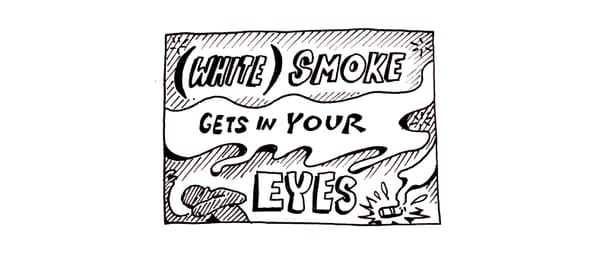
When U.S. military serviceman Aaron Bushnell self-immolated five months into the genocide in Gaza, people debated constantly about whether it was an act of mental illness. Without writing an entirely different essay about definitions of sanity and medical diagnosis as political narrative containment, I believe Aaron Bushnell was experiencing true witness in this day and age: connecting to suffering so great that he saw no other witness option but to burn alive in solidarity with those who did not choose to. Jiddu Krishnamurti's philosophy is extra resonant here: "It is no measure of health to be well-adjusted to a profoundly sick society." What defines success and sanity under late capitalism is a carbon copy of what defines spiritual failure in Hashem's beit din, court of justice. How can anyone truly witness so much callous death and senseless murder and not be driven to the edge?
I cannot join Aaron Bushnell in his result; as a Jew, my spiritual code asks that I resist suicide as a pathway. His was one of many options of witness, even in a world that is so dire that we often feel precluded from imagining others. For every atrocity in need of witnesses, there are infinitely more possibilities for how to become one.
Where do we give testimony of the horrors? It is that action which transforms the experience of seeing into witnessing. In places and times where the courts are corrupt, it is crucial for us to find or build new places to give testimony instead. In absence of a place to give testimony (which is to say, in absence of justice), Aaron Bushnell's self-immolation was a way to give testimony in front of as many people as he could. Violence or self-harm is a modality through which one can testify to what they've witnessed, but the lesson to take from Aaron's act is not about death but courage. The witness on the stand must be brave enough to speak. If there is no court that can serve justice, we must each figure out the witness podium in our own lives, as part of our avodah, each person's unique holy work, where we too can be courageous enough to give testimony. There are as many places to do so as there are hearts that beat—even small places.
I strive for more, but most natively I have two: The Shabbes table and the comix page. Nearly every week, on Friday night, I gather with friends and loved ones to eat and to tell. And nearly every day that is not Shabbes, I sit down with my notebook to draw and to tell—in publishing this newsletter, I am working harder to turn that telling into testimony.
These are places that demand my honesty and spiritual attention. No meaningful Shabbes dinner nor comic ever got made through dissociation. Whether or not I am courageous enough to say what troubling things I've seen, or what horrors I am wrestling with each week, I try to remain attentive to these time-places as opportunities to become a witness. Sitting with people I love, usually over food I've carefully prepared, sets a table for actual testimony. Drawing images of what too often feels unspeakable and then sharing these intimate things with people who want be transformed opens up a possibility for all of us to become true witnesses. Comix are especially visceral, tapping into something older and more powerful than language alone. If I can show what I saw, again and again, in ways that wake up those who read or hear it, G-d willing, instead of producing more callousness, we can create more justice. Where do you testify?

Witnessing matters for experiences great and small. It is not just the horrors in need of witnessing, but the beauties and joys as well. There is no justice without visions of goodness, compassion, connection, love—and contrary to much Christian theology, punishment is not synonymous with justice. Witnessing one another by telling the stories of each others' lives actually creates more witnesses. And more stories.
Feeling seen and listened to leads to a desire to see and to listen. How wonderful does it feel to hear someone tell a story about you, especially a story in which it's clear that the teller truly sees and understands you? There's a reason why the sages believe that citing your sources brings redemption into the world:
Thus you have learned: everyone who says a thing in the name of him who said it, brings deliverance into the world, as it is said: “And Esther told the king in Mordecai’s name." - Pikei Avos, 6:6
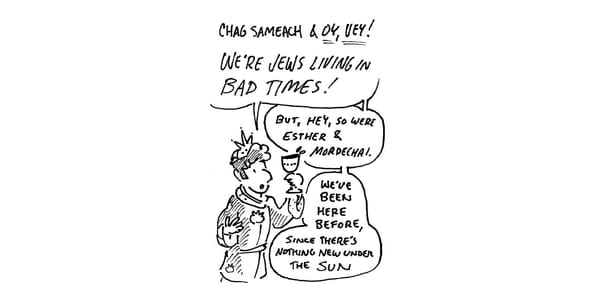
As I reflect on this past Gregorian year, having started writing this newsletter a few months ago at the inspiration of my dear friend Misha Holleb's parsha commentaries, I have found that my own comics often center stories about the people I love. As in this week's comic, which is itself a meta story about telling stories, I feel that my self-understanding as a training maggid, a Jewish storyteller, comes from exactly this place: it is my role in G-d's world to witness the sages of our time, who I believe are often the teachers and friends in my life, and to tell of those teachings as far and wide as I can. Ideally, as a good story.
When we testify to what we've witnessed, justice is revealed. When we tell true and loving stories about each other, holiness is revealed. When we keep each other in our mouths, we speak olam haboh into being.
Witness is a fire that only grows.
Thanks for visiting my newsletter. Your readership, feedback, and support means the world to me. Thanks for being here. If you'd like to subscribe, it's always free—but if financially supporting me as an artist is feasible and matters to you, you can subscribe to my newsletter for just $5/month or send a one-time donation here.