Go Slow to Go Fast: Trans Health Torah
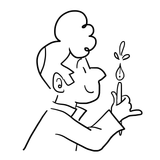

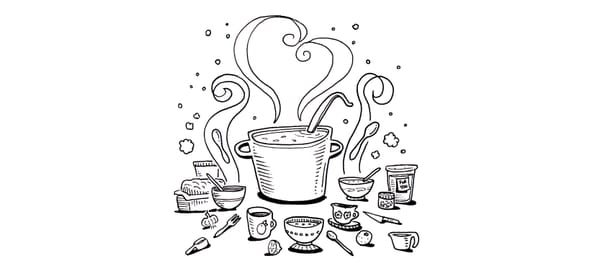
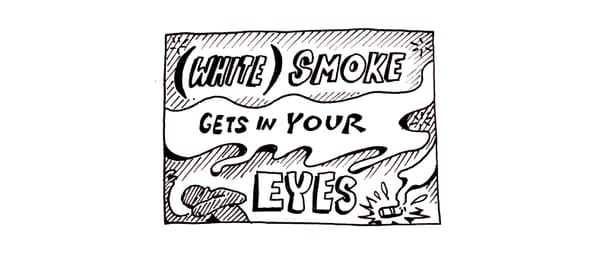
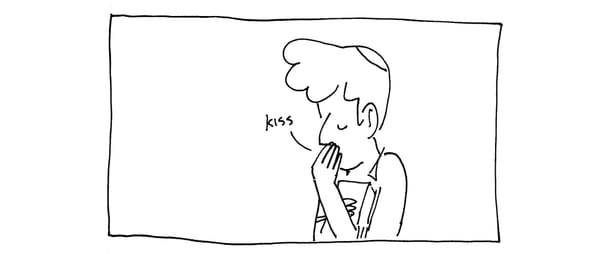
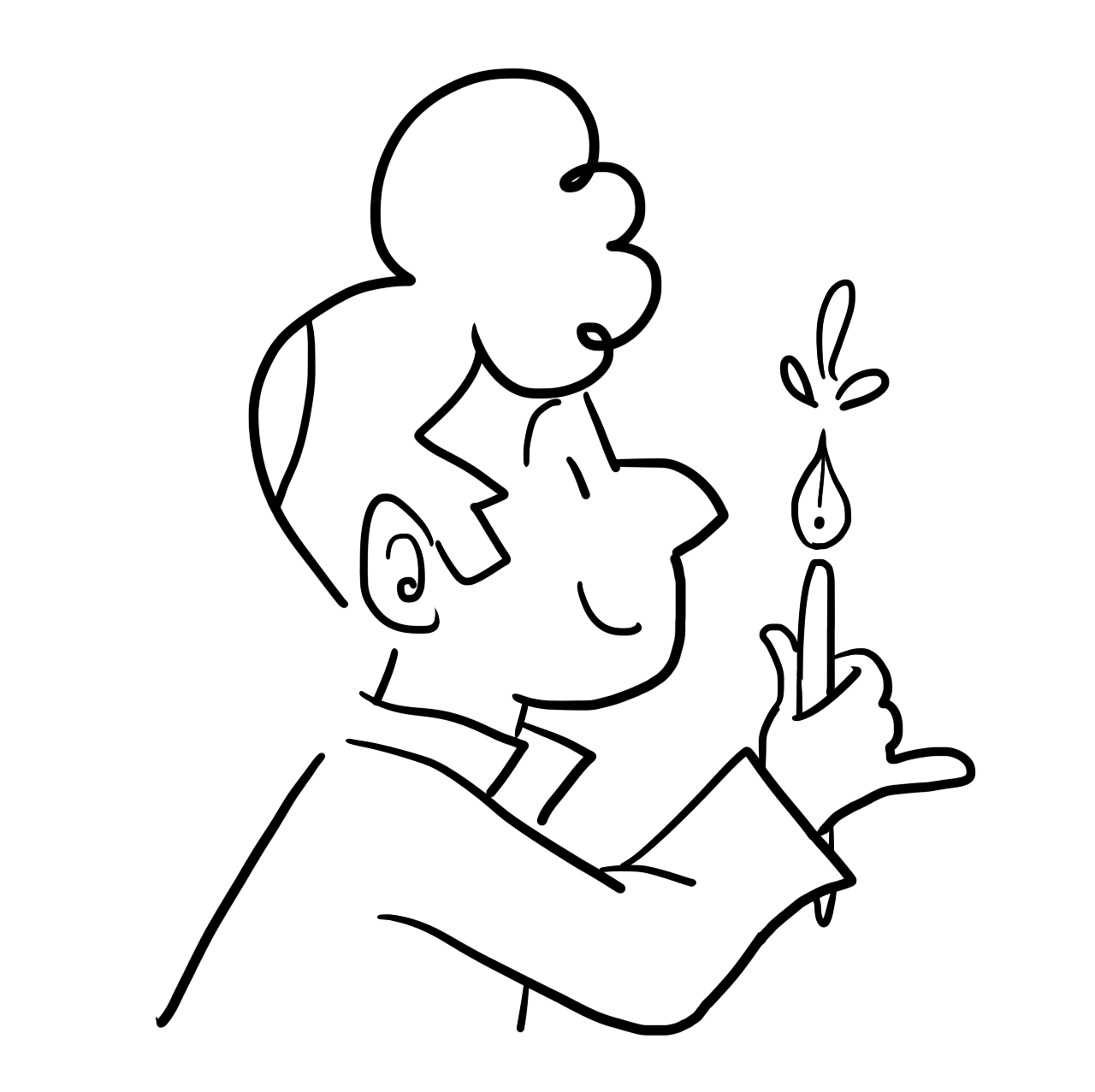
This newsletter is a week delayed; I've been off the map for two reasons. The first, I've been at an artist residency at Sadeh Farm, the UK's only Jewish land project. The second: I was beleaguered with new, terrifying, and debilitating stomach pain at the intersection of anxiety and a full-blown saturn return. It left me unable to move for several days in bed, unsure of what to do to stop the pain. Here, I'll share with you some of insights I might call embodied trans spirituality, or maybe just gastrointestinal Torah. Interwoven with this short essay are calming drawings from my time at Sadeh, which I hope you'll visit (and support) if you're ever that side of the world.

For most of my adult life, my dearest friends have often had chronic pain or other serious lifelong health conditions that ebb and flow. I have long wondered if trans people are more likely to have autoimmune conditions, with the trans men in my life disproportionately suffering from chronic fatigue, pain, migraines, POTS, EDS, or other mysterious and undiagnosed-perhaps-undiagnosable ongoing health struggles. Certainly this data seems reflected somewhat in what bits I gathered in my Testosterone Survey Zine (what little is there is just the tip of the unresearched iceberg, at the intersection of medical misogyny and transmisogyny).
I have remained, for the most part, unusually temporarily able-bodied among my cohort. At the risk of a very public TMI, my most major health struggle is IBS—a condition that I've never formally received treatment for, but seems pretty clear given my Ashkenazi heritage and multiple trips to the bathroom every day. I completed a research-based hypnotherapy course last year that seems to have genuinely helped, despite my initial skepticism. In spite of that, my recent episode of excruciating stomach spasms seems to mark a turning point. While I intend to visit a GI specialist soon, I've been reflecting a lot about the relationship between my emotions and my body, and the urgent need for more robust and holistic frameworks for healing and health, with trans folks especially in mind.

My dear friend Gavi had been healing from a concussion for a year and learning the Torah of longterm recovery. I had arrived on his doorstep for Rosh Hashana completely overwhelmed; overbooked with social obligations, working overtime on projects, and running myself ragged across town to look after my friends in dire straits. He sat me down, stared me in the face, and said quite seriously: "At this rate, the day is going to come when you're going to hit a wall and you're going to completely collapse. It's not a question of if, it's when. I'll be there for you when it happens. But more than that, I hope that you'll slow down enough to stop it before that wall arrives."
The message haunted me as I rounded the curve of the year. I had to start pumping the brakes—I didn't know I had any. Gavi warned me of this at the same time as my now-husband was in the throes of a transition-related and lifethreatening surgical complication the doctors ignored for several months. Not one but two of my most important trans men were struggling daily and immersing themselves in the necessary wisdom of pace, time, focus, intention, and rest. In watching them both work diligently to survive, I tried to study that work, praying I could store of some of it away and integrate these teachings secondhand when my time came.
None of these reflections are revelations to people who have lived with longterm disability—all of these teachings that are revelatory to me are basic tenets of Disability Justice and Disability Torah. I'm just new here, so it all feels remarkable.
When my stomach convulsions started, I thought it was just a bad stomach ache. But several trips to bathroom later, it didn't let up. A nauseous, angry pain circulated on the top of my stomach and would not cease. Every time I thought about the visa-work-relational-financial-fascism-related stress, it immediately became so much worse. Even being around my partner, whom I love dearly, kicked on my emotional monitoring, leaking out what little energy I had and then exacerbating the pain. Talking made it worse. I had to sleep alone in order to be fully present with myself and take care of the extraordinary pain with whatever bits of energy I had left.

I couldn't help but remember my husband in dire condition this time last year, unable to leave the house due to medical neglect (or as I think of it, abuse) after a transitional surgery. He moved slowly, intentionally, as gently as possible. I watched him conserve what he could. I watched him discover a place within himself that allowed him to psychologically survive three months of what can only be described as torture: what we would later discover was an implant that had ruptured into his bladder. I watched him practice a faith that seemed mind-bending. I watched him fight to survive, out of a deep love for himself and a desire to live inside this body—a body he loved, that was treated with unbelievable callousness by those who were meant to help him.
Holding his spiritual strength in mind, I slept with a water bottle, did breathing exercises. Astonishingly, in the deepest parts of the night, when the pain was most unbearable, I had the epiphany to put on a song. I'd learned in the last year that my IBS can be triggered by auditory stimulus (certain loud noises or kinds of music that I've started to refer to as 'stomach ache music'), so I wondered if it could do the opposite. As soon as I listened to "Growing Up Sideways" by Brad Barr, the pain relented for that blessed two minutes of guitar. I looped it until the exhaustion took me into dead sleep.

I'm not writing this to suggest that extreme pain is just in our heads—it's not. The thing that finally lifted me out of these agonizing days was an antispasmodic called Mebeverine, which relaxes the gut muscles to stop convulsions. But I do want to describe the link between our emotional states and how that physically comes to bear on the body in ways that are acute and longterm. Our relationships to each other and ourselves can help us ease and navigate the pain—doctors and medications are only ever half the battle, especially when the former makes it harder for us to feel like knowers and agents of our own bodies.
When I was younger and had just started testosterone, I lived in a massive co-op. One night in the middle of a midwestern winter, I began having cramps that were more painful than any I'd experienced, despite the fact that I wasn't menstruating. I laid awake for hours in my cold attic room of that old Victorian before I finally texted my friend-and-housemate Meg, someone who I affectionately refer to as my Momdad, a butch twenty years my senior who parented me through my queer young adulthood. At 2am, miraculously, she was still awake; moments later, a knock at my door. She turned on the lamp, put on Andrew Bird's Fingerlings 4, and then gave me a long back massage that completely alleviated the pain. "The testosterone and estrogen are battling it out right now in you," She said. "They're finding balance. They'll get there, but for now, you've got to help them find equilibrium." With a full beard and no exogenous testosterone, my very intersex mentor knew what she was talking about.
It was the first time anyone had presented me with a framework for how to think about my hormone system beyond the endocrinologist told me about risking infertility and whatever sexual future she thought healthy young girls should have. I still don't know if a hormone wrestling match was what caused this mouse-hours pain; had it been a recurring episode, I would've gone to a medical doctor. But what I do know is that this framework helped me feel so much less afraid of my body, and taught me that massage, music, and heat help when I have pain. Instead of being met with a freaked out, "This seems like an emergency and mystery!", I was taken care of by someone who had a body that was like mine, who had experienced something similar, and given somatic and spiritual advice about what to do when it gets bad. Not being afraid of my body might not prevent me from physical pain or illness, but it certainly can alleviate the added layer of pain that comes from the stress of alienation and fear. And as I am learning again today, that extra layer of pain is no joke.

In world that doesn't seem to want to take care of trans people or our bodies, we have to use absolutely every tool at our disposal to take care of ourselves. Few trans people I've met have ever avoided having unpleasant if not actually dangerous interactions with doctors, who are often hostile to us on the basis of our bodies and genders. While I strongly believe the innovations of modern Western medicine are crucial in saving lives and improving health, I also know that when we outsource our ability to understand and heal our bodies to people who couldn't care less about them, we weaken our ability to create robust spiritual (and somatic) medicine. That's one more way that the world puts us into danger.
Throughout my days of stomach pain, I texted with Gavi. He encouraged me to be curious about the sensations, to listen to what the pain was telling me. In the moments it would let up slightly, I was tempted to try to get work done, to do housework and other chores. But Gavi encouraged me to continue to rest: "This is the secret: Go slow to go fast."
I realized how much I instinctively fill my capacity to the brim, leaving little extra. It's compulsive—I take phone calls, work on projects, move constantly. It makes it impossible to be present with my body enough to know its cues and needs. No wonder I was shocked to find that four different major life stressors would result in a full-scale GI system shutdown. I am currently working hard to learn how to slow down, and especially to not push myself past a social battery I didn't even know had an upper limit.
I am so blessed to have had many friends and mentors model for me what it looks like to rest and recover. I believe that it is because I have been the beneficiary of their wisdom and Torah that I was better prepared to meet my own moment of pain, and g-d willing and g-d forbid, more serious and longterm illness or disability. I am working to continue to integrate these lessons when I am well, for however long that may last. Truly, our relationships to each other and discussions about our bodies and health are vital resources in surviving and thriving.

Gavi once told me another secret: "Rest isn't a month to month decision, or a week to week decision or even a day to day decision. It's moment by moment, minute by minute, second by second, the choice to rest."
Trans Day of Rest may be September 19th on the Trans Calendar, but it's worth practicing every day—and even every second. As Gavi later elaborated to my husband Ed over Pesach, "We may have one day of rest in seven with Shabbat, but how can we create one moment of rest in every seven?"
This is disability Torah, but it's also trans spiritual wisdom. How much better prepared to face the physical challenges of being in the world when we have companions and frameworks that help us understand our struggles! How crucial it is to remember how much agency we have in our relationships to our bodies, not because we've mind-over-mattered them, but because we understand our sachel, our wisdom, lives interconnected in the bodymind.
They call the gut the second brain—I am learning the Torah of my stomach. We may be in the belly of the beast right now as global fascism rises yet again, but I remain ever hopeful in our ability to take care of ourselves and each other, finding freedom not in the state, but in our relationships and our bodies themselves.

Chag sameach. May your Channuka be filled with rest in the dark and joy in the light.
Thanks for being here. Your readership, feedback, and support means the world to me. If you'd like to subscribe to my bi-monthly newsletter, it's always free—but if financially supporting me as an artist is feasible and matters to you, you can subscribe for just $5/month or send a one-time donation here.