Toward An Unbound Judaism
Introducing myself as the new co-host of Judaism Unbound, just in time for Passover.
Content note: discussions of fascism, transphobia, non-explicit mentions of sexual violence.
I'm excited to announce a big change in my occupational life: as of this month, I've officially begun my new role as co-host of the Judaism Unbound podcast. Alongside my friend and colleague Lex Rofeberg, each Friday we release a new episode re-imagining Judaism through an "Unbound" lens, interviewing scholars, practitioners, artists, activists, teachers, and doers across the diaspora. You can listen wherever podcasts are found.
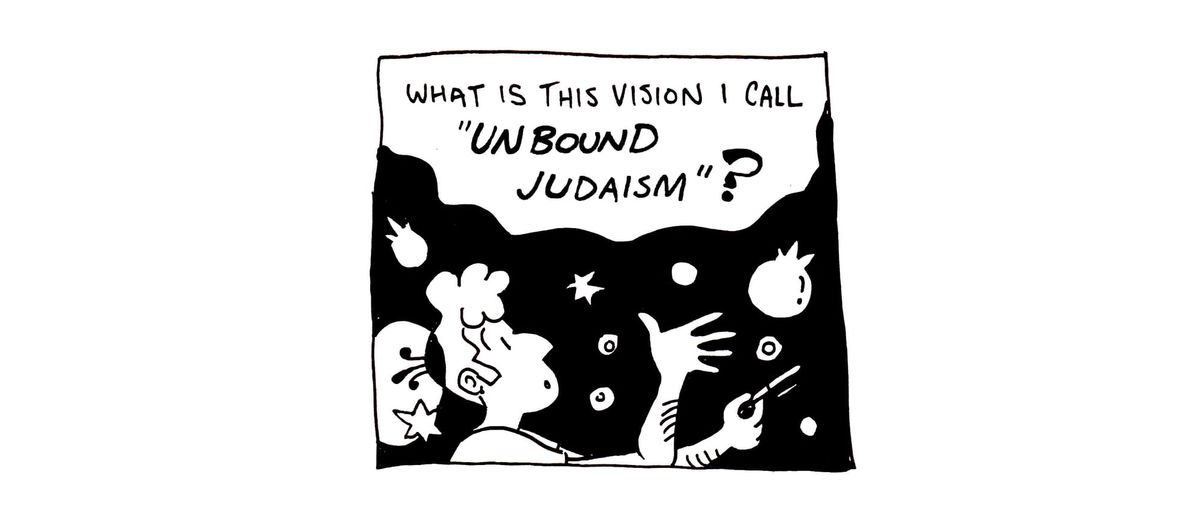
This flagship interview-based podcast, which I have listened to since it began a decade ago, has since flourished into both an organization and a philosophy. "Unboundedness" is amorphous and flexible by design: to me, it's the idea that each of us has a unique contribution to a collective project. To be "Unbound" is to know that building out the world-to-come requires critical skills and spiritual self-esteem. From there, we have the tools to transcend dogma, break open the status quo, combine tradition with imagination, then create something necessary, brilliant, and new.
In the case of the podcast, that collective project is Judaism. However, day by day, I become more convinced that Judaism is just the vehicle that I use to make my collective contribution to a more liberated world.
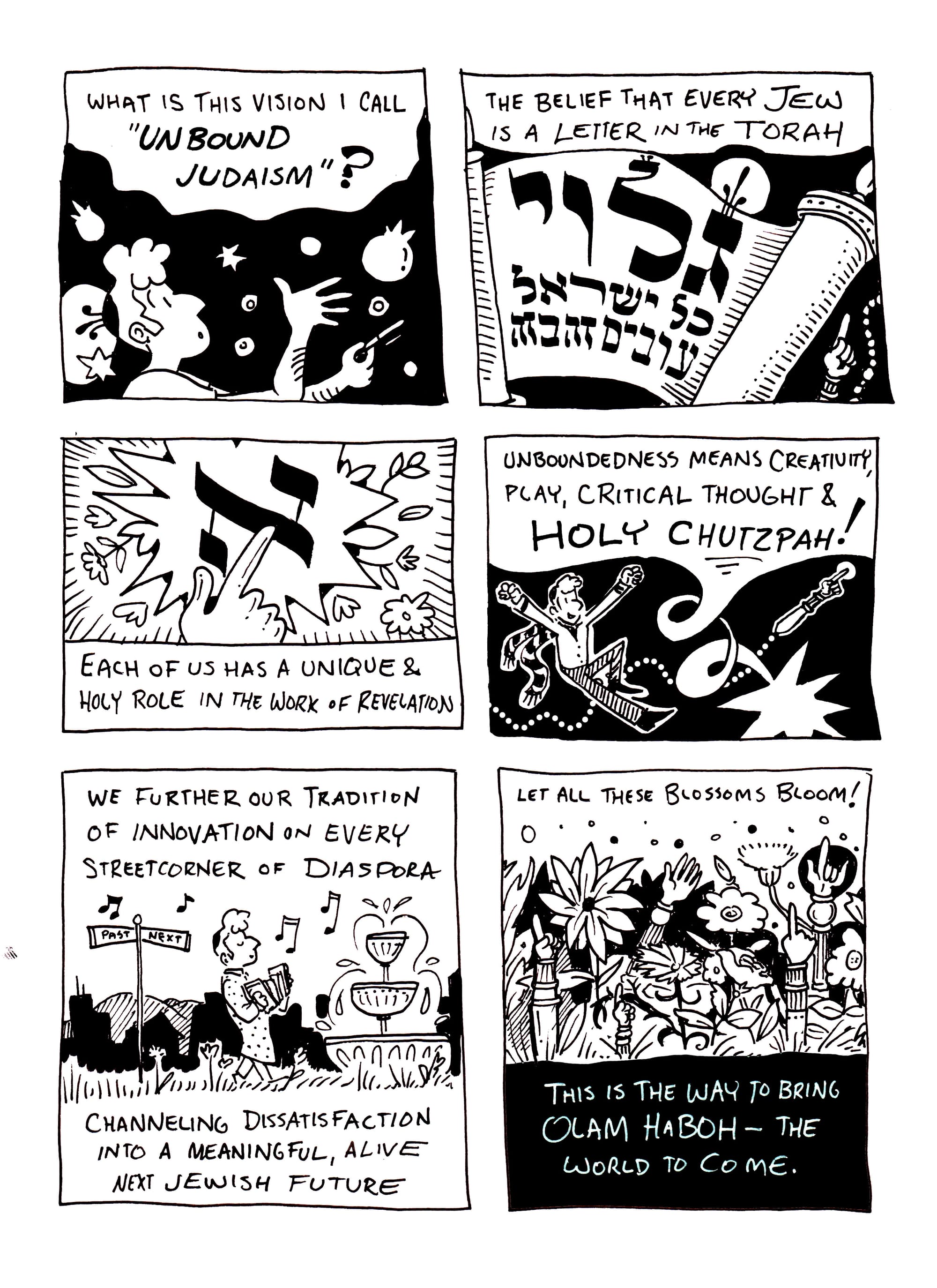
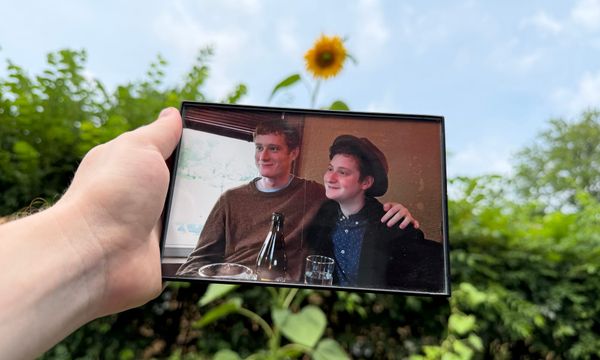
Within an organization that is unabashedly pluralist, my own particularism informs my outlook on Unbound Judaism. I'm a decade into being a shomer shabbos transsexual. I'm a deviant and transatlantic non-monogamist. I'm white, I'm a yid. I'm a comix artist, writer, editor, and maggid-in-training. And now, B"H, a podcast co-host. From my own life, I derive the knowledge that our gifts come from our specificity, our many-ness. Each of us have a role to play in the work of creation, revelation, and liberation. That's why these are the titles of my three introductory podcasts.
 Lex Rofes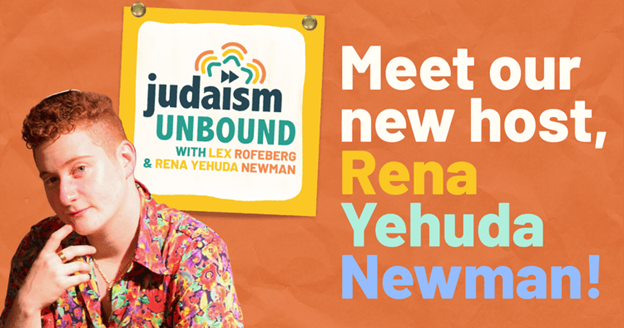
It feels crucial to describe the balance between the individual and the collective, especially coming from a hyper-individualist culture like the United States at a time it descends into fascism and its citizenry feel ill-equipped to collectively cast off that yoke. I've become fond of saying "We can't do it alone but we have to do it ourselves," and so too, "We have to do it ourselves, but we can't do it alone."
My "unbound" mission centers the idea that our uniqueness is a crucial contribution in the good fight, in the struggle towards a more liberated world, in bringing mashiach—but this is an expression of our agency, not our aloneness. Chassidic teachings on unity and multiplicity express that each of our gifts are unique precisely because of their relation to the collective whole. In turn, the collective doesn't nullify us, it accentuates those gifts and imbues our individual lives with meaning. Unity and multiplicity aren't opposites, they're a relationship. "Unboundedness" breaks open the binary so we can flourish beyond the narrow strait.
I see this so clearly in my other capacity with Judaism Unbound, as the Director of the UnYeshiva's Certificate Program. Each month, I meet with our cohorts of brilliant Unbound Jews whose truly diverse orientations combine into a community of rich dialectic, serious wisdom, and prolific action. The more confident each Certificate Student grows in their avodah, their holy work, the more strength I feel toward my own abilities to fulfill mine.
I believe this framework is also a source of "holy chutzpah", the spiritual self-esteem that allows someone to boldly create new practices and meanings that are the actual work of future-building. My fellow Jews experience tremendous disempowerment at the hands of hierarchical religious institutions and coercion to assimilate into state projects. It takes a lot of strength (and for some of us, actual experiences of holiness) to resist those forces and do the work of revelation instead: What is it that only you know? How can you reveal it so we can celebrate it together, making this great fire burn even brighter?
 Lex Rofes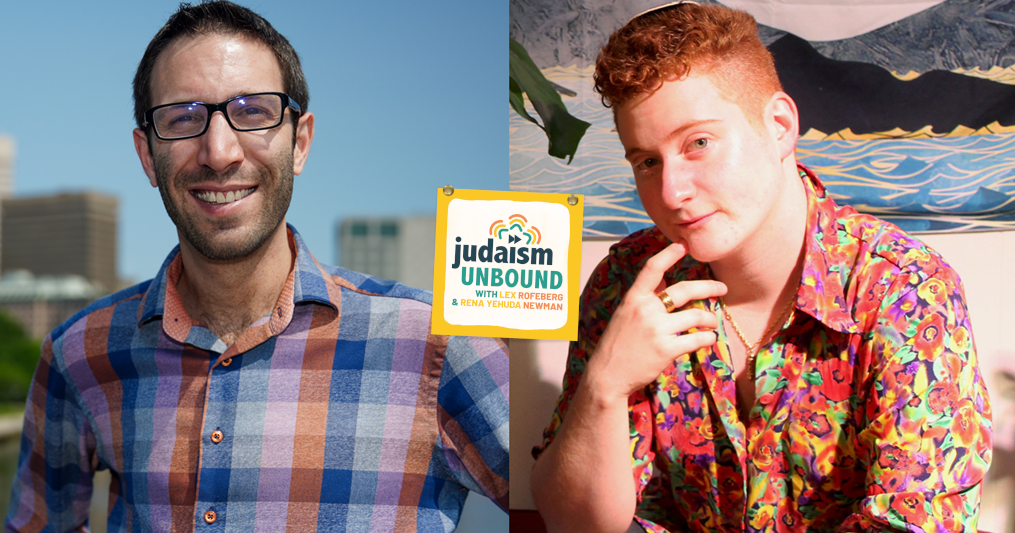
In my work on the podcast, I feel called to talk about genuinely empowering spiritual frameworks. I'm not talking about waifish versions of mindfulness or coping techniques that ultimately allow the machine to keep turning; I'm talking about the religious tools that have allowed Jews to survive a two-thousand year exile, connect with our neighbors, resist authoritarian regimes, and experience holiness anywhere and everywhere.
As Passover approaches, I find myself increasingly nervous about travel. Being a white transsexual and American national, I'm leagues more protected than travelers of color, especially undocumented immigrants or even visa holders, as the administration installs ICE in airports across the United States. Even so, according to new rules, my foreign-national husband could be barred entry to the United States for life for simply entering the country as trans. I check online forums daily to read experiences of trans arrests and detentions. For those trans people who are currently detained, many are facing forced conversion therapy and sexual abuse. It's a terrifying time to be trans.
For me and many of my loved ones, the stakes of spiritual discussions are far from abstract. I am not interested in Jewish organizational conversations that continue to pretend insulation from current events or plead to maintain a false and reprehensible innocence. The next Jewish future is one that holds our struggles and fears with equal gravity as the Torah and teachings necessary to wrestle through them. It is one that creates witnesses and brave actors. It asks none of us to erase or forget our suffering—in some cases, may guide us in the alchemical mechanism of deriving wisdom and connection from within it. I am building a Judaism that does not ask any of us to erase ourselves and sees a Jewish fate as obviously and endlessly intertwined with the fates of our neighbors.
Judaism Unbound Executive Director Miriam Terlinchamp recently gave over to me a teaching, the origins of which she has sought but not found, and I understand as ruach-hakodesh, a teaching of divine revelation: "How will we know when mashiach has come? When everyone has somewhere to sleep and everyone has enough to eat."
 Lex Rofes
As Jews across diaspora begin the preparations for Passover, may we also prepare ourselves seriously to say the words in the Haggadah, "Ha Lachma Anya," may all who are hungry come and eat:
הָא לַחְמָא עַנְיָא דִּי אֲכָלוּ אַבְהָתָנָא בְאַרְעָא דְמִצְרָיִם. כָּל דִכְפִין יֵיתֵי וְיֵיכֹל, כָּל דִצְרִיךְ יֵיתֵי וְיִפְסַח. הָשַּׁתָּא הָכָא, לְשָׁנָה הַבָּאָה בְּאַרְעָא דְיִשְׂרָאֵל. הָשַּׁתָּא עַבְדֵי, לְשָׁנָה הַבָּאָה בְּנֵי חוֹרִין.
This is the bread of affliction that our ancestors ate in the narrow place. Anyone who is hungry should come and eat, anyone who is in need should come and partake of the Pesach sacrifice. Now we are here; next year we will be in the land of those who wrestle with G-d. Now we are enslaved; next year we will be free people.
In a time where so many people are struggling to make ends meet, where the wealth inequality of the United States and global economy is so extreme and sick, what does it mean to take this ancient invocation seriously? What assumptions about your own life, powers, and obligations need unbinding? We are each so much more powerful than this version of the world wants us to know.
Each blossom of that liberation can only come from the place of one's deepest knowing, the convictions and beauty that is mine or yours alone. That's a joy. It is particularism that makes unity possible. Unbind yourself from the narrownesses that isolate you from other people, that keep you from your power. Ask what they are. Discuss them at the seder table. Turn it and turn it and turn it, then turn what you learned into action.
This Pesach, may we reveal a hundred thousand new ways to get free.
Thanks for visiting my newsletter. Your readership, feedback, and support means the world to me. Thanks for being here. If you'd like to subscribe, it's always free—but if financially supporting me as an artist is feasible and matters to you, you can subscribe to my newsletter for just $5/month or send a one-time donation here.
If you would like to fulfill the invocation of "Ha Lachma Anya" and be a part of a giving circle for trans tzaddikim who are struggling under the current administration, contact me at rena.yehuda@gmail.com.