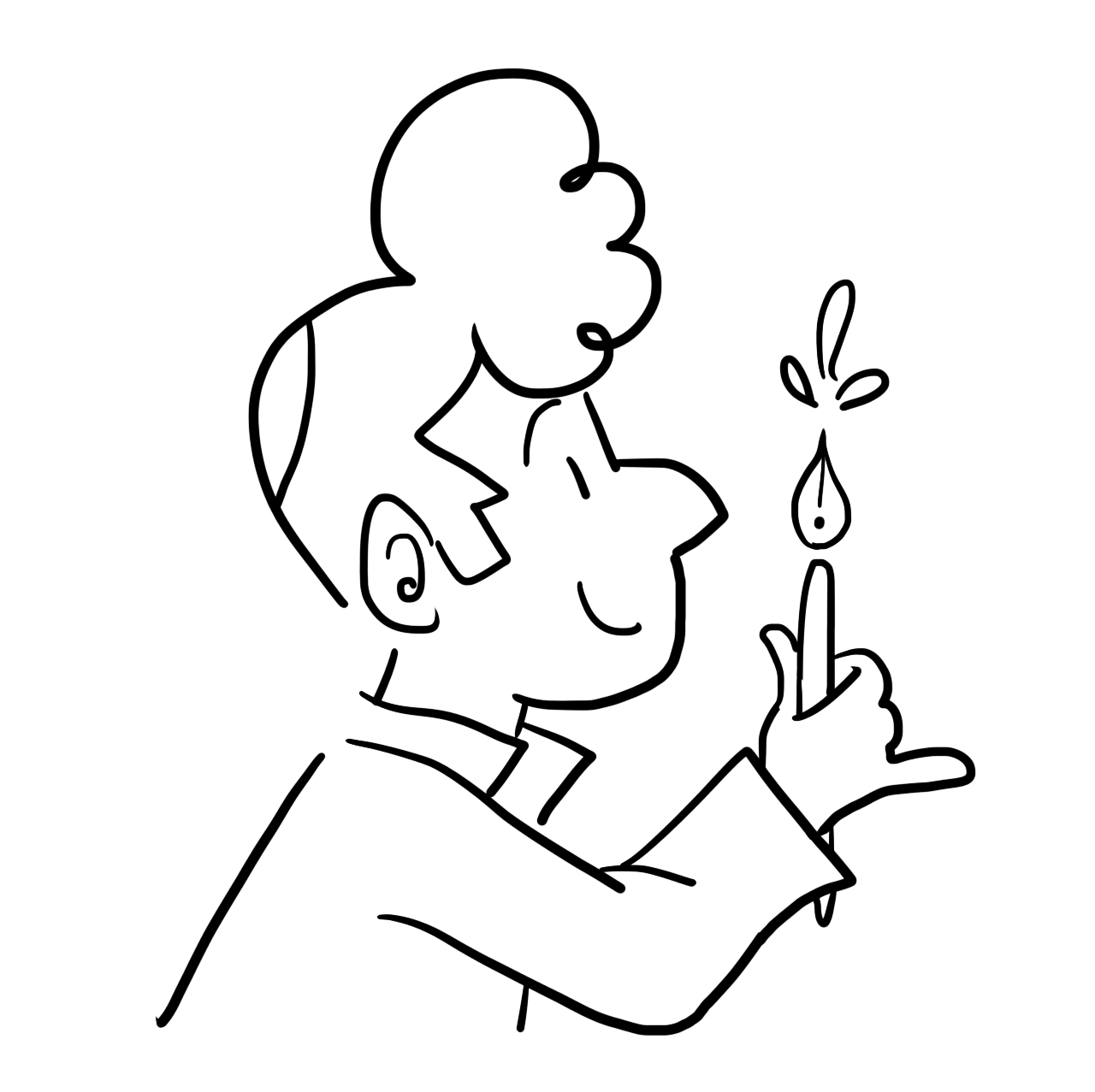
Shabbat in Exile

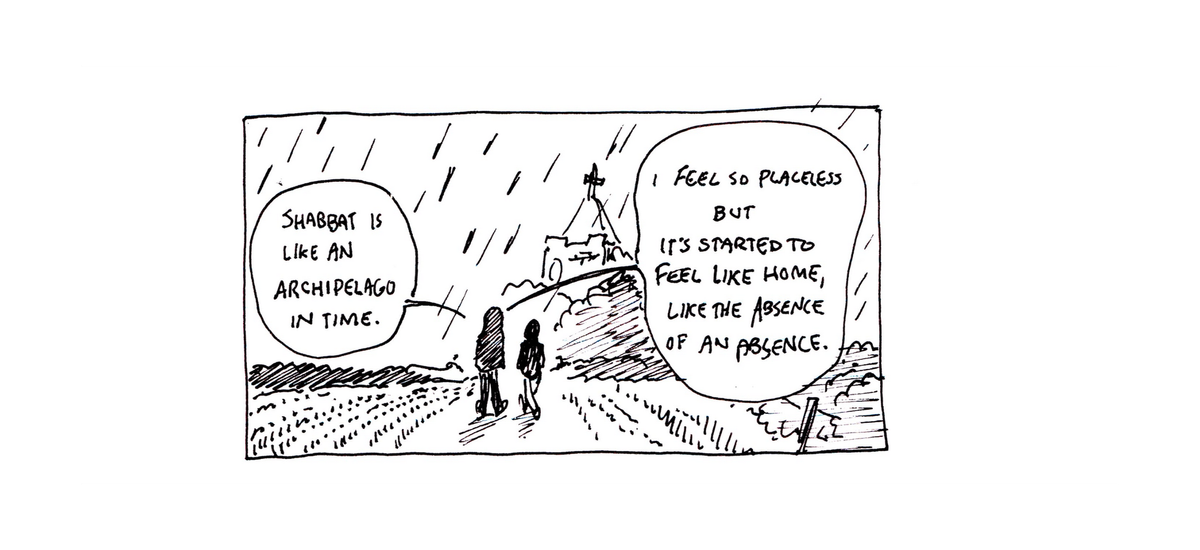
Time as a different answer for a Jewish way-of-being beyond colonialism.
This year I've been learning how to make Shabbat far away from other people. In the reaches of a little town closer to the English countryside than to London itself, my Shabboses are usually sparse, with a lot of wide open space. I invite friends up from the city to walk with me down ancient public footpaths that cut through farmland, and take short hikes to a thousand year old church that sits unassumingly among these old throughways, nestled against the hedgerow.
Shabbat can be alienating when spent alone or mostly alone, and if I don't put in the effort, it can anxiously end up that way. It's high contrast from a life in Brooklyn crunched between a flourishing scene of antizionist minyonim, constant meal invitations, and queer park meetup-potlucks, which I have to measure against my own energy so I don't spend every seventh day completely overloaded with people.
So too, I've also been learning how to break Shabbos to make Shabbos. Different landscapes in diaspora require different practices, and I increasingly refuse to desecrate the Sabbath by enforcing my own suffering. The Tanaitic Rabbis didn't foresee car culture, nor public transit. A stateside life in the urban shtetl is no match for a spread-out, idyllic, threatening Anglo country-suburb. So I take the rail down to Kabbalat Shabbat, I drive to a Shavuot tikkun leil and comfort myself knowing it's an electric vehicle. I even say a shechechiyanu over my first time scheduling a phone call with a dear friend for a long Shabbos afternoon, walking in the local woods while we call.
The absence of other Jews in this landscape makes me less self conscious, so I'm free to experiment with my ta'asehs and lo ta'asehs, my doings and not-doings. I am determined to make Shabbat travel with me, since it seems to arrive regardless of where I find myself or how prepared I really am. Plenty of people are zocher Shabbat, "remember Shabbat", rather than shomer Shabbat, "guard Shabbat". Both are commandments, and arguably the former is more important. As Halakha becomes a set of recipe cards I reference from time to time, I'm realizing that for me, after ten years of pretty consistent observance, I know the recipe well enough by heart. That means I also how to modify it to suit my wandering table.
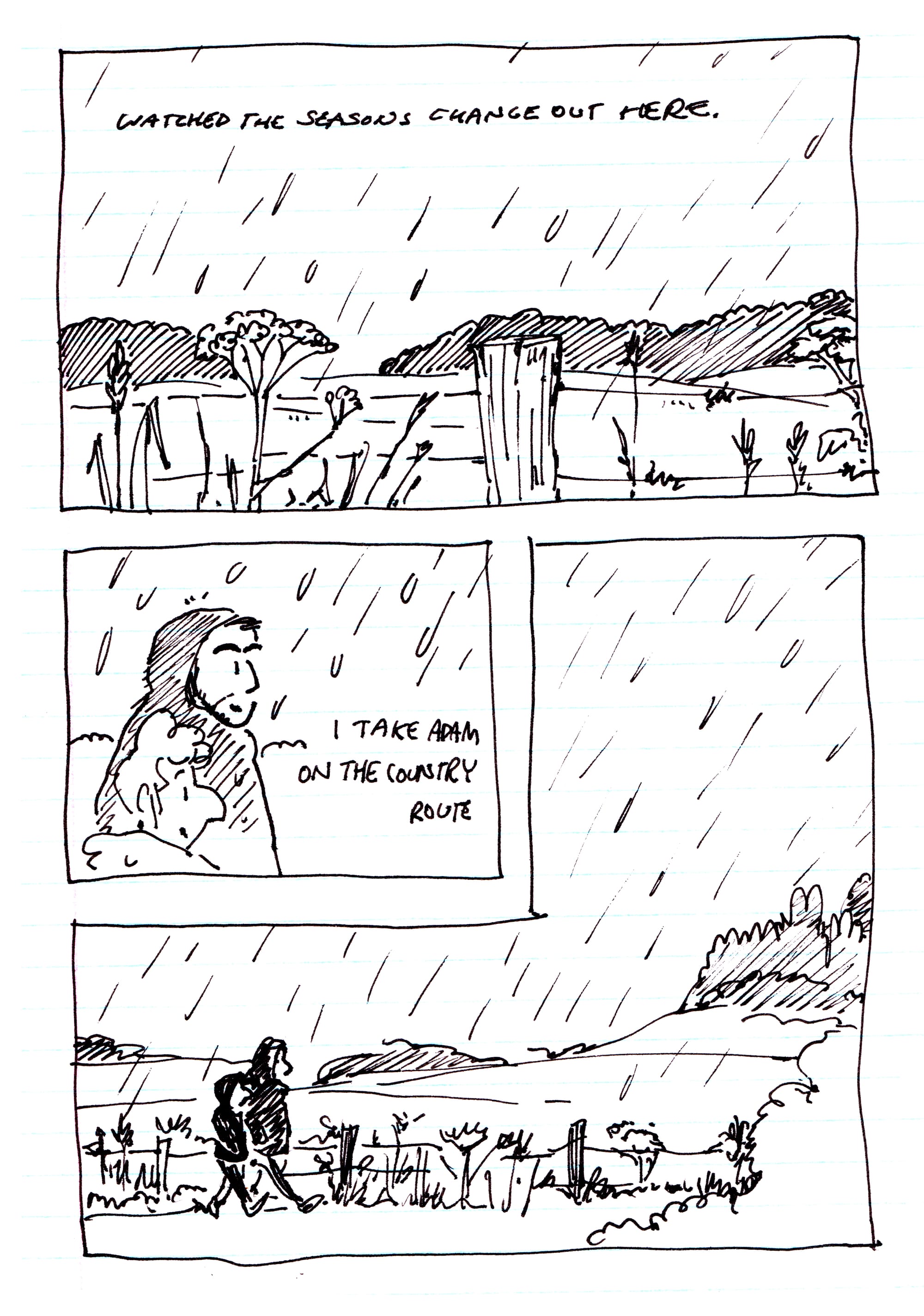
It's hard to maintain a spiritual practice when genocide continues, when a recession rages, when every day presents a new horror. Yet, it's also a primary way of staying awake and alive. The natural world continues to grow, die, and regrow itself around me on this weird island, the heart of a nearly-dead empire. I've never been this close to trees and plants this regularly. I see red poppies on the roundabouts and I think of the distant friends in Gaza I've fundraised for since the genocide began, the words of Gazan poets that give over so much gentleness about a beloved landscape razed to the ground. I think of its stewards, exiled and still there. I think of Palestinian Tatreez stitched in the shape of the flower.
For all of our historic longing to return to Jerusalem, a military occupation is the opposite of land stewardship. As Jews, we've been unlanded for so long that our tradition understands stewardship of time far better than that of space (what could demonstrate that fatal misunderstanding more than Israel and America's shared atrocities?)
However, in spite of Zionism's ecological catastrophies, Judaism's deeply invested knowledge of time-beyond-space is not a failing; it's a unique and particular Jewish contribution to the collective project of human endeavors. There's such wisdom and revelation in that gift of knowing time better than space. We have to acknowledge the fact of this orientation first, then work to understand its boundaries and innovations.
Even modern diasporists who reject the project of Zionism still find themselves stuck in the matrix of a colonized world that prioritizes space rather than time. There's so much richness to Molly Crabapple's title, "Here Where We Live Is Our Country", a rallying cry for Jews who rebuke nationalism and statehood, proclaiming a connection to all places and therefore the dignity of all who live there. However, growing up on Turtle Island as a 4th and 5th generation American, whose Ashkenazi lineage assimilated into some kind of whiteness, I'm still a settler there too. I need more robust answers.
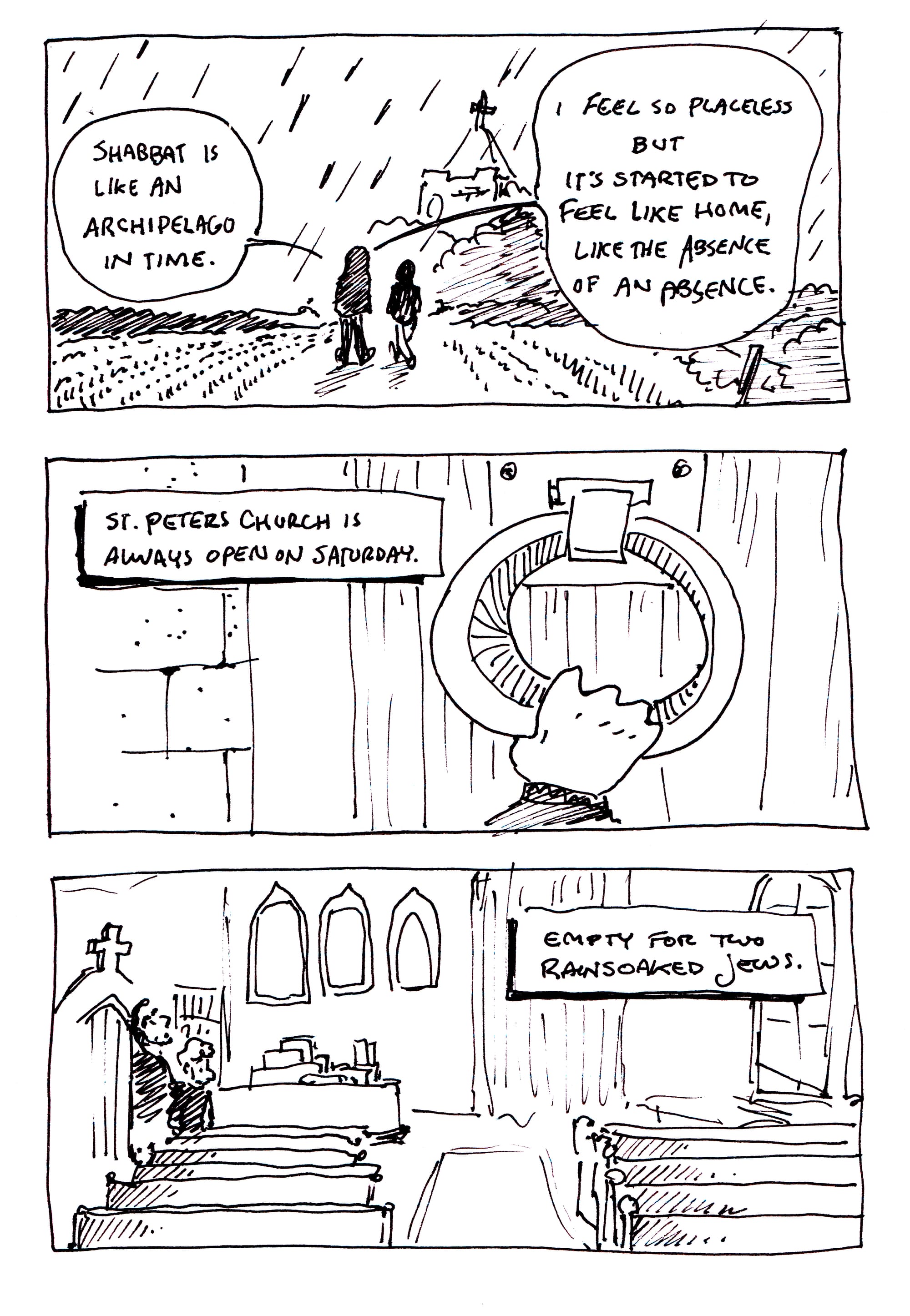
It's strange to spend time in an uncolonized landscape. Even progressive Brits will sometimes contest this ("The Normans invaded! All of human history is a series of invasions!"), and even without being a scholar of decolonial thought, this is disingenuous and inconsistent with contemporary definitions and histories of colonization. But nothing feels as striking as the casualness with which a pretty little parish resides in rolling hills, the local Christian davening spot untouched by violence. All the destruction happened elsewhere in the name of the Church, instead. It's heimish, almost cute, until I read the xeroxed community bulletin zine inviting parishoners to a teatime celebrating a local ancestor who "bravely" fought alongside Cecil Rhodes in the Boer Wars.
Part of me envies the sense of uninterrupted history that a place like this takes for granted. Yet, the continuity exists on bloodshed. In the time I've been out here, I've experienced random antisemitism (from children, especially, including with makeshift flamethrowers) so virulent and nonsensical that I'm left dumbfounded by how loud the volume dial for all kinds of casual xenophobia here, even as an American, even as I fly under the radar with my whiteness, which can be regained or obfuscated depending on whether or not I wear my yarmulke.
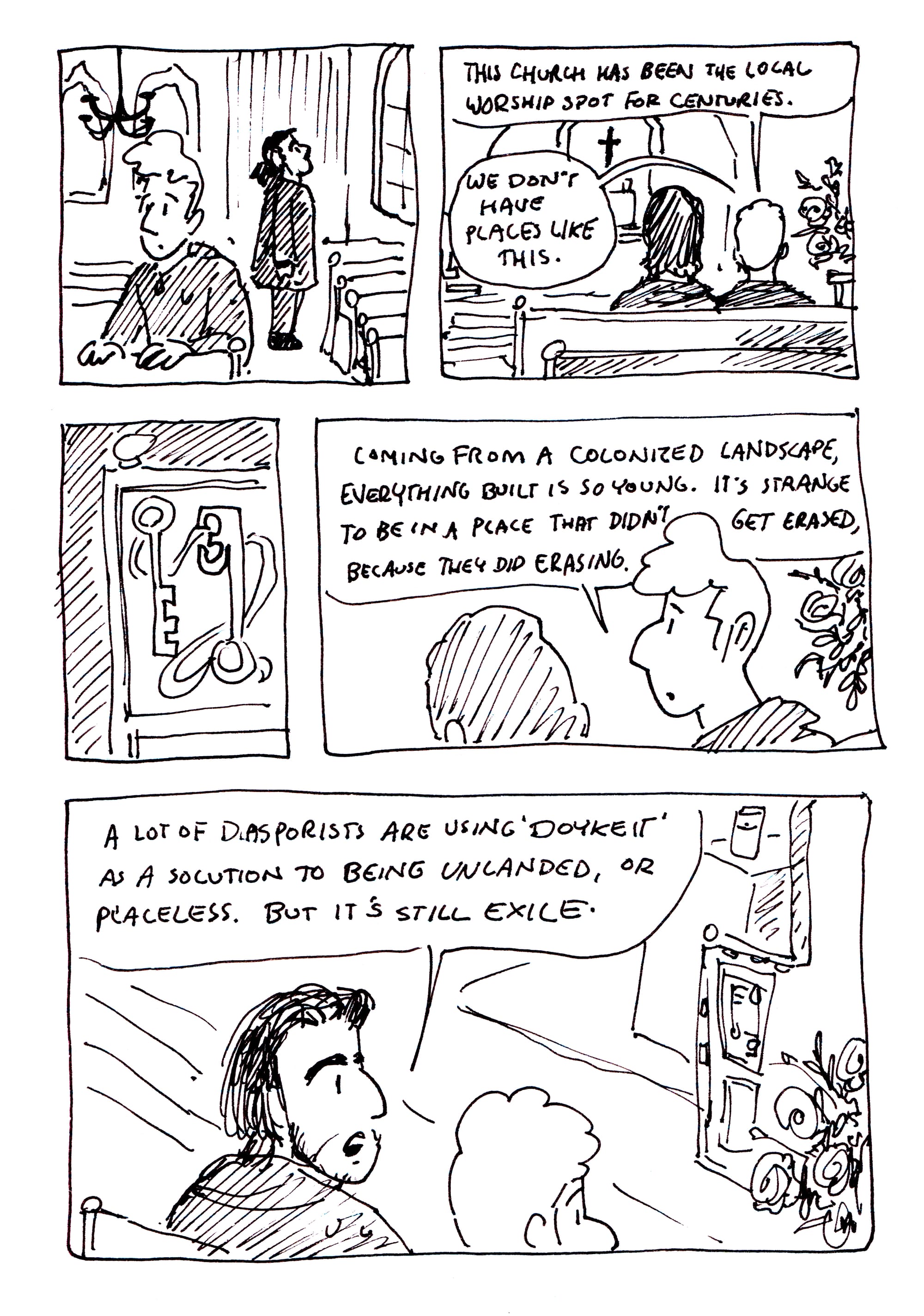
There's no "going back to where we belong" for many Jews. While the idea of doykeit, a yiddish "hereness", contends with blood-and-soil nationalism, it's still European as hell in its origins. Doykeit responds to its context: a continent that invented the Nation-State, then divided people by rigid citizenship status, documents, and national borders. Jews, among others, got caught in the gears. The concept is useful, but it doesn't address our full relationship with land and its other stewards. Colonization means that rejecting nationalism is not actually enough for teshuva when it comes to reparations for indigenous genocide. It might be the bare minimum.
A "natively" Jewish approach to this problem might actually be less about centering land at all. Our contemporary spiritual apparatus of rabbinic Judaism still asks us to seriously contend with the tension of being placeless in a world where G-d gave us a home of time: Shabbat. Sure, we can technically dwell anywhere, but it's crucial to consider how we do so, especially if we violently barged in the door—or followed behind those who invaded, pillaged, and destroyed.
Our two-millenia exilic experience can be a prooftext for a world without borders. However, taken without the relevant, genuine bitterness of exile, I'm not sure even the most thoughtful land-based Jews can be accomplices to the Land-Back movement until we get right with our own lineage and inheritance, which reminds us again and again that we are still landless wanderers until Mashiach comes. This inheritance is bittersweet and demands we hold the beauty with the grief. And as my colleague Dania Rajendra likes to say, "Grief is rupture." It's an emotion that acts as a doorway; it allows empathy, change, and transformation to take place.
The early Reformers of Reform Judaism abolished T'sha b'Av, the fast day commemorating the destruction of the second temple, because they thought that it was in fact a good thing that we are now beyond those barbaric practices of animal sacrifice and are now free to assimilate among the nations. I disagree with this celebration of exile and displacement; it feels like papering over a wound. I'm not interested in deleting our intergenerational memories of violent dislocation. So too, I'm very curious about what it means to answer that memory without a land-based solution. Ben Lorber and Shane Burley's "Safety Through Solidarity" approximates this question, but I want to go a bridge further to suggest that spiritually speaking, time provides answers. We call G-d "HaMakom", the place. We call the Torah, "Etz Chayim", the Tree of Life. Perhaps Shabbat is another feature of a holy landscape painted with time as a medium.
I find myself wondering how Shabbat-as-homeland can be complementary to other peoples whose ancient knowledges cherish space as thoughtfully as Jews cherish time. The lessons of Shabbat are of hospitality, rest, vitality, celebration, and connection. If these are the holy attributes of our orientation to time, certainly these must apply to our orientation to the world of space! Perhaps the Third Temple is one of time, since Abraham Joshua Heschel suggests Shabbat is like a palace. How might a time-based way of home-building actually make us better neighbors and better agents of holiness, wherever we live?
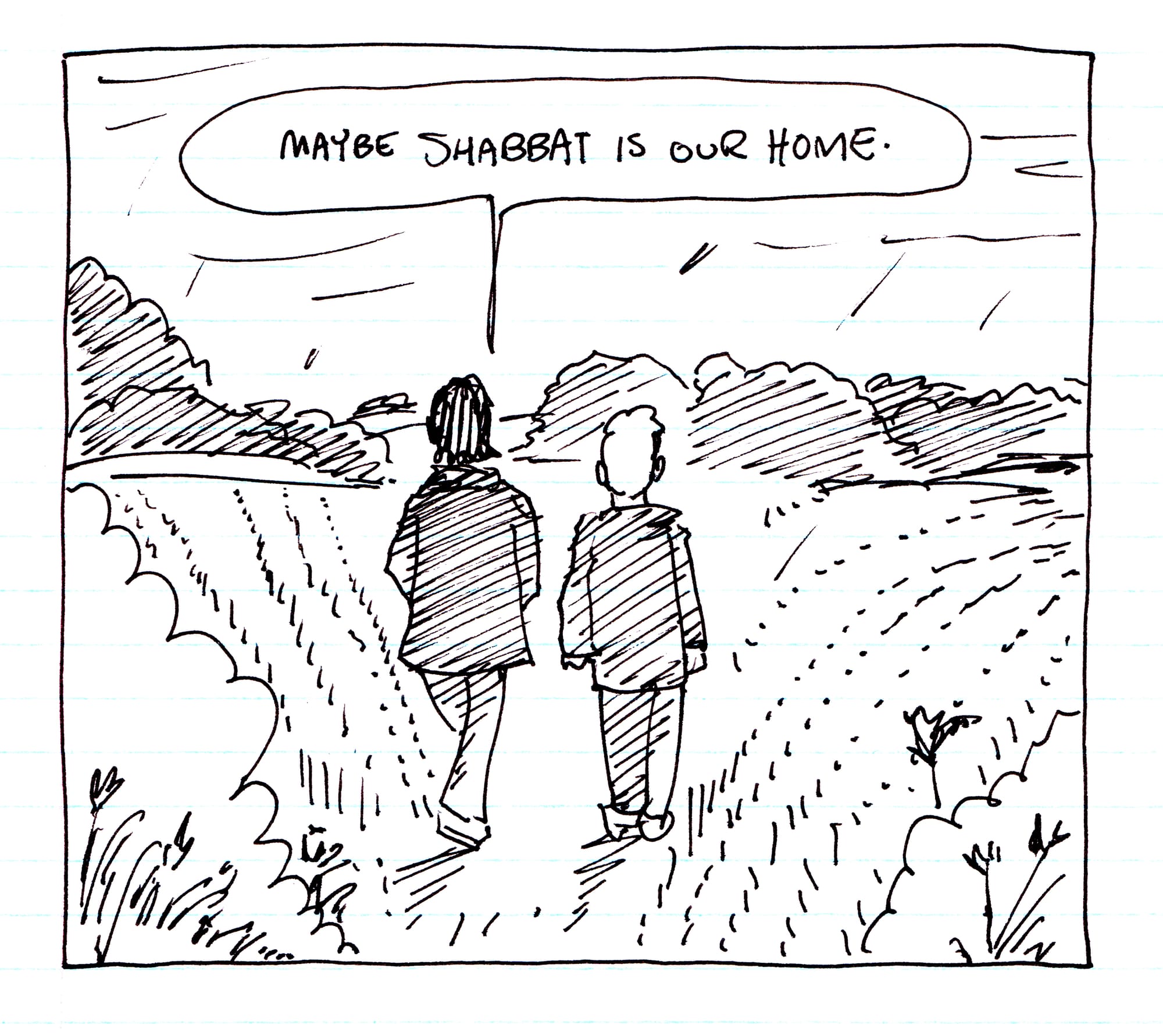
The more that we as Jews can understand time as our homeland, the more Jewish tools we might glean towards building olam haboh, the world to come, that doesn't reenact settler colonialism. It's not about just being able to be anywhere—a right that all human beings must have in a world increasingly wracked by climate disaster. It's about how we treat the place and people around us, tending to our own spiritual relationship to all dimensions of creation. Understanding the nature of Jewish exile and the spiritual tools we've built to thrive inside of it might help us tread thoughtfully on ground that is not ours. We're temporary guests in G-d's world; what if the seventh day was our home?
Thanks for visiting my newsletter. I've been on a brief hiatus, but I'm getting back in the saddle to create bi-monthly comix-essays.
Your readership, feedback, and support means the world to me. Thanks for being here. If you'd like to subscribe, it's always free—but if financially supporting me as an artist is feasible and matters to you, you can subscribe to my newsletter for just $5/month or send a one-time donation here.
Tzedekah Opportunities: Two Giving Circles
Consider making a monthly donation to one (or both) of two giving circles for trans tzaddikim, righteous people, struggling under the current regime.
- Music Educator tzaddik giving circle. Support an incredibly talented composer, musician, and teacher of children of all ages. They've been working very hard to make ends meet, but at the intersection of underemployment and demanding gigs, many of their teaching jobs are physically stressful and exacerbate their current disabilities. They are a wheelchair user and their current jobs do not pay for transportation. This giving circle is to help sustain them with rent, grocery, and transportation support. To join the Music Educator's Giving Circle, click here.
- Trans elder tzaddik giving circle. Support a mentor and queer parent to many LGBTQ young adults, as well as a writer. After being fired on a transphobic basis from her past job and the following year of job seeking, she's in need of more regular community support. Living in a state with fewer trans protections has meant that more employers are emboldened to discriminate based on age and gender. This giving circle is to help with rent and groceries during this period of long-term unemployment. To join the Trans Elder's Giving Circle, click here.