Where The Grief Gets In

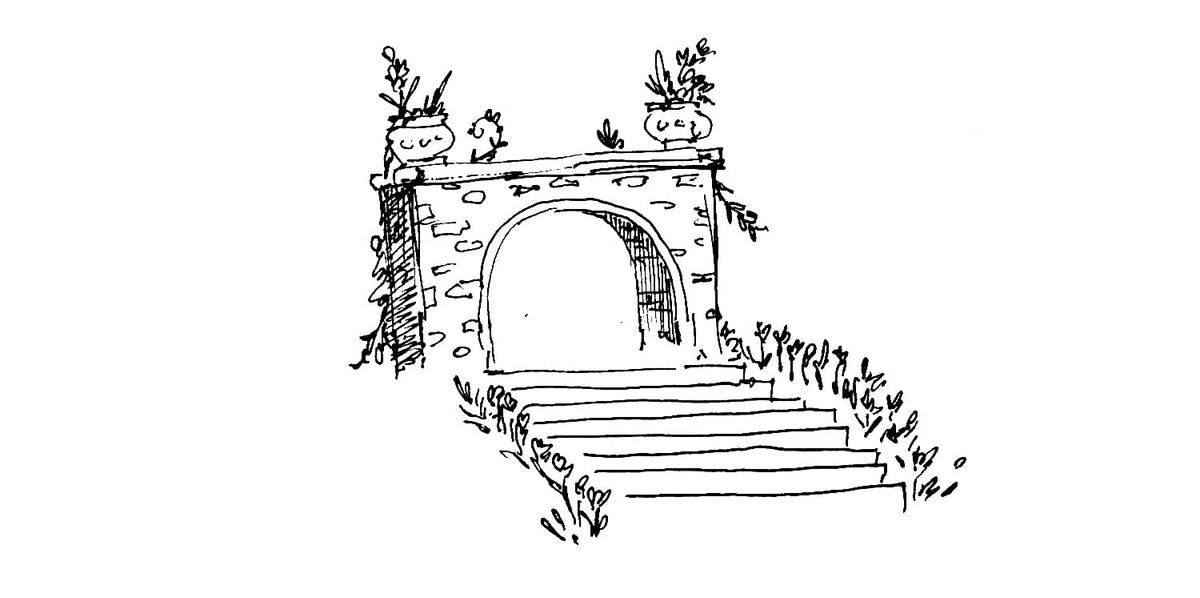
On T'sha b'Av, visions of a new world begin with grief in the current one: there is no revelation without the door of lamentation.
As we approach T'sha b'Av, the day of Jewish communal mourning, I find myself struggling to let myself bend and break into the task of grief ahead of me. I keep the door closed and busy myself with chores, tasks, calls, frivolous shit. I'm blocking again.
I can collect the crises; Wildfire smoke fills the skies again this time of year. Friends and family shelter inside, AQI making it dangerous to do the activities that make summer pleasure. Climate collapse looms. The genocide continues in the ironic shadow of the world cup. Someone very close to me was hospitalized. And then, just after we thought it was finally over, my partner needs another surgery—the compounding result of trans medicine's current terrible reality that doesn't seem to give a damn about our well-being. My pelvic floor issues seem to be getting more complicated. The klipah, the concealment, of G-d's world never fails to reward us with tragedy.
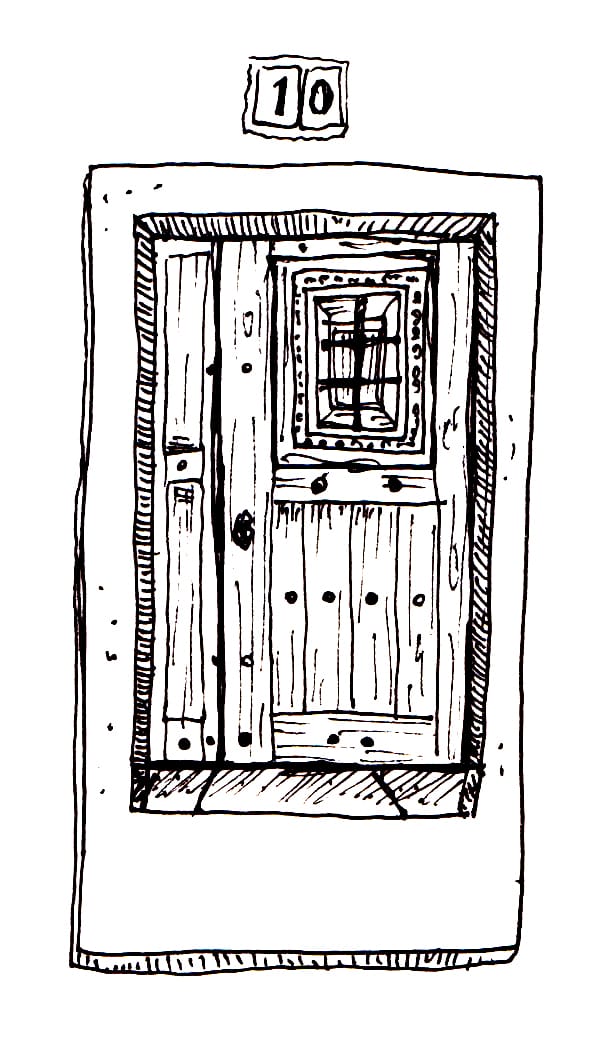
The garden is growing. It's the height of the season. Even in the drought conditions, the onions rise from their stations and the squashes bang on. So too does the Jewish calendar highlight this: we're in the lightest and longest days of the year, the workload is heaviest, things are moving too fast and somehow, in spite of all of it, we absolutely have to slow down.
Some days it's too hot to move. The heatwave makes sure of it. There's so much to be done, so much growing and turning and working and harvesting, and yet, at this point in the churning of the summer, we're forced to the limit. The Nine Days leading up to T'sha b'Av, when we commemorate the destruction of the second temple, burned to the ground by empire, toll like a warning bell: put down your tools, shelter in place. You might think you can cram for it, but grief is knocking and it requires both time and space.
It is the custom, on erev T'sha b'Av, to sit on the floor in the dark to read Eicha, the book of lamentations. Sometimes we use flashlights or candles to see the text. I return now each year to a 5784 / 2024 T'sha b'Av reader entitled, "For These Things I Weep," in which the editors have annotated the entire historical megillah with true events from the genocide in Gaza. Reading such stories in the dark feels emblematic of the day, not because darkness is evil or wrong (a binary of light-and-dark that too often harps a white supremacist chord), but because in the dark, we cannot see. Words are hard to make out. Things hide. We dwell inside concealment, even in the brightest time of year.
Yet it is easier to fall apart in the dark. Tears find me when I feel well-hidden, when no one else in the room can quite make out my face. What lies at the other side the hallway of grief that T'sha b'Av presents to us?
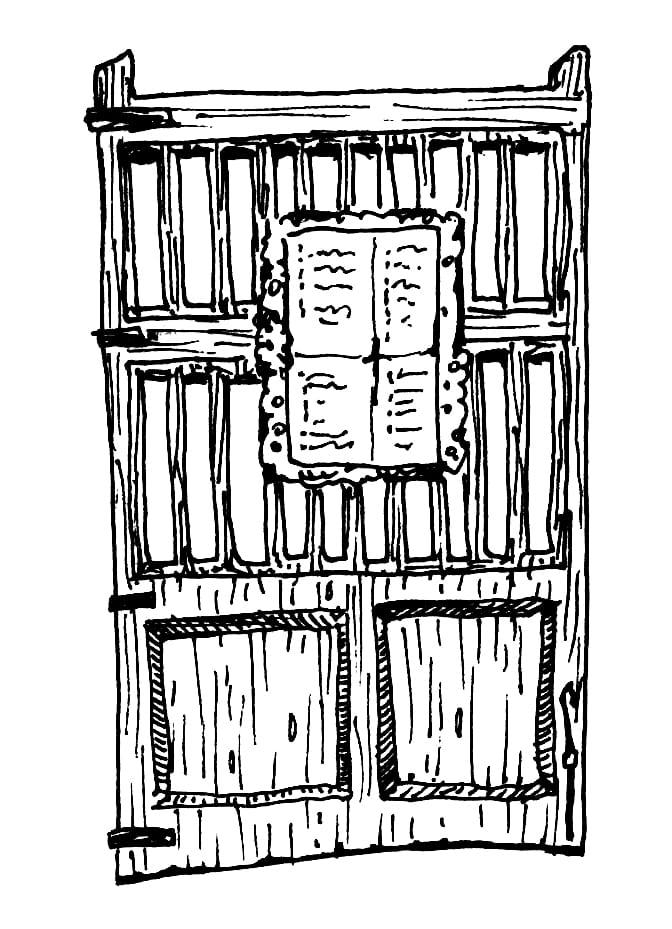
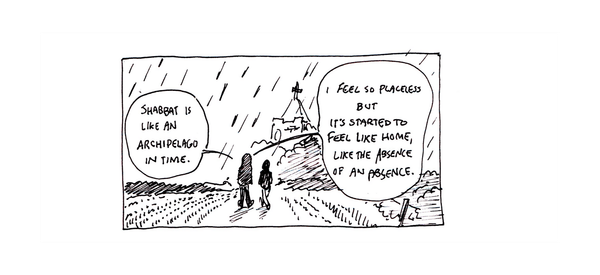
When the temple was destroyed, G-d did not leave the world, but rather the home where we received G-d no longer stood. No more windows, no more rooms of greeting, no more knocking on a front door. Without this place, where do we go? There is holiness around us and yet, we cannot perceive it. Therein lies the tragedy at the heart of T'sha b'Av. Dayenu, it is enough of a reason to weep.
Yet grief itself is a gate, a door. Every year the cry of "Eicha" articulates and illuminates new questions about the tragedies around me. Eicha, which translates to some aching combination of "How?" and "Why?" tries to put into language the experience of total disorientation within an agonized people. How is it that we have all of the tools and technology to stop climate collapse and yet, it continues? Why is it that one of the greatest global mass protest movements couldn't stop a genocide? How can we persist in G-d's world, where there is so much beauty and holiness, and yet remain callous to one another? Why does baseless hatred, sinat chinam, still exist in a world where there need not be scarcity? T'sha b'Av begins the ascent into the High Holidays, like an origin pointing towards Yom Kippur, the year's seat of holy judgement and teshuva. And while there's great work to do leading up to that Holiest of Holy days before the Book of Days is inscribed and the gates are closed, it is said that the gates of tears are always open.
Western culture lacks any mechanism for communal mourning, for to do so would mean to stop the machine of production. Grief requires acknowledging and honoring loss—and as a prerequisite, it also requires accepting the paralysis that accompanies the task. Capitalism could not withstand it. If I am fasting, I lack the strength to water the garden in drought. Labor remains, waiting, and must wait. We are not meant to work ceaselessly, yet when the ominous impact of grief feels so potentially great, it seems even more impossible to stop—because what if you fall apart and can never recover? Even more dangerously, what if through the doorway of grief, something entirely new and transformative arises?

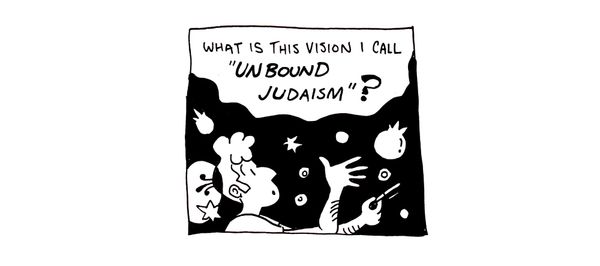
This year for T'sha b'Av, Lex Rofeberg and I spoke on the Judaism Unbound podcast with Andy Kahn and Dania Rajendra about grief as rupture—rupture being a breakage, a point of change. (Andy and Dania have written beautifully about the Jewish relationship between grief and abolition, which I also recommend reading as we approach the holiday.) In a world that feels unendingly broken, opportunities to truly acknowledge and live into the brokenness are shockingly rare.
This year, I've felt a lot of resistance to opening up to the opportunity that T'sha b'Av presents me: to let in the grief that I block out every day. I refuse to be hospitable to that grief, a terrible and unwilling host. I weigh this against a deeper knowing that if I'm ever to experience visions of olam haboh, the world-to-come, we cannot avoid feeling the enormity of pain that marks olam hazeh, the world-as-it-is.
The only way through to revelation is by entering into the grief of concealment. Perhaps this is why the Shabbat directly preceding T'sha b'Av is known as Shabbat Hazon, "Shabbat of Vision": The contrast between what a better world could be is so sharp from the devastating status quo that, when we allow the grief to work its way through a hardened heart, suddenly we can see what is so often obscured when we refuse to acknowledge the wound.
The nature of G-d's world is to heal. Not passively, but actively, with rigorous collaboration from us in creating wholeness. We already have the technologies to live in a world that reduces carbon emissions, with enough food and fresh water for everyone—the fatalism we see today is the malicious argument of the Oil Lobby pouring billions of dollars to convince us we're helpless precisely because resistance works. Even short cessations on global emissions make a tremendous impact. But that healing requires rupture, interruption, stand-still, disorientation, heartache. Only in that place of devastation can anything new arise. And that requires holding the real possibility that there may not be something positive at the other end of it—that grief must be allowed to present itself lishma, for its own sake: an idea I struggle with greatly myself, and perhaps produces my resistance to opening up my own heart's gates.
There is no way through to a better world without the grief of this one. In the heat and height of summer, may we be crushed by the weight—and in that crushing, like crushed olives, produce an oil to illuminate this doorway. IY"H, perhaps it may lead to something beautiful and entirely new.